Skip to content
Adekola.
AboutWorkExperienceContactDownload CV
Mechanical engineer2026
3Featured engineering projects
2,000CFD cases in design research
2Open-source research tools
Adekola

Mechanical engineer and PhD researcher developing CFD tools, numerical models, and practical engineering solutions—from turbomachinery aerodynamics to subsea hydraulic equipment.

Explore projects ↗Get in touch
Research · Software · Mechanical design ↓
Inlet distortionIllustrative fan-face total-pressure field
Interactive demonstrationMove cursor to shift the pattern
Low
High
About

Engineering tools, built for difficult problems.

I am a mechanical engineering PhD candidate at the University of Windsor, specializing in computational fluid dynamics, turbomachinery aerodynamics, and scientific software development. My research investigates how non-axisymmetric blade rows can mitigate the effects of distorted inlet flow.

I develop geometry-processing workflows, extend OpenFOAM-based numerical models, conduct verification studies, and automate CFD analysis. Before my PhD, I worked in subsea engineering, preparing manufacturing drawings for hydraulic interfaces and performing factory acceptance testing.

Based in Windsor, Ontario · PhD expected December 2026 · Interested in industry engineering and R&D opportunities

{ }
Python + CFD

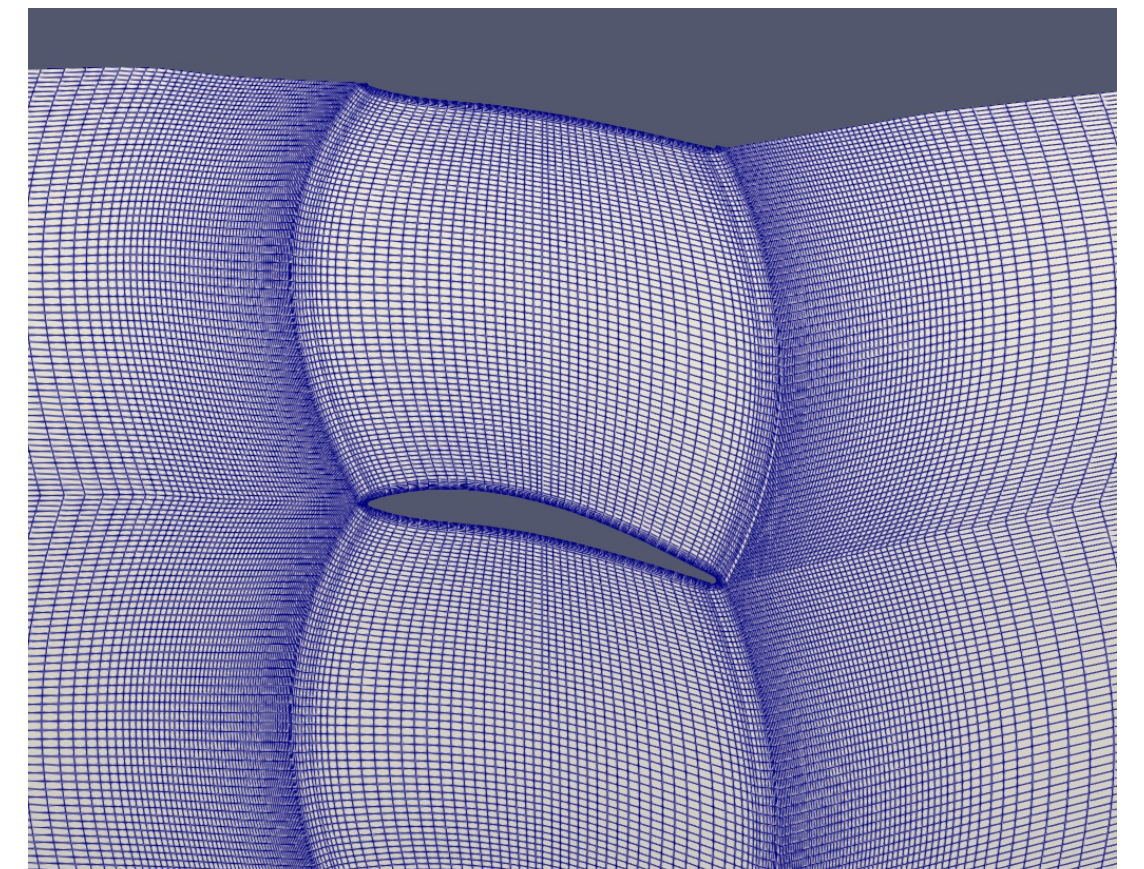
Developed APT-Grid, an open-source structured mesh generator for periodic and aperiodic blade rows.

Structured grid surrounding adjacent aperiodic guide vanes, from APT-Grid manuscript
≈
5M vs 60M

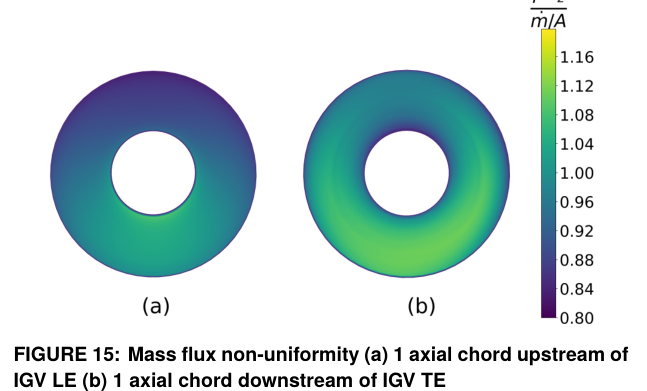
Body-force NAX model uses ~5 million cells; a mesh-independent blade-resolved full annulus was estimated to require ~60 million.

Predicted mass-flux distribution upstream and downstream of a non-axisymmetric guide vane
Engineering capabilities
  • CFD solver development, numerical methods, and verification
  • Computational geometry and automated meshing
  • Python workflows, HPC simulation, and engineering analysis
  • Mechanical drawings, hydraulic interfaces, and hands-on FAT
Portfolio

Selected work

Three projects illustrating software development, numerical modeling, and practical engineering.

All projects ↗
APT-Grid mesh of geometrically varying blade passages
Python · OpenFOAMResearch software

APT-Grid

Open-source structured meshing for periodic and aperiodic turbomachinery.

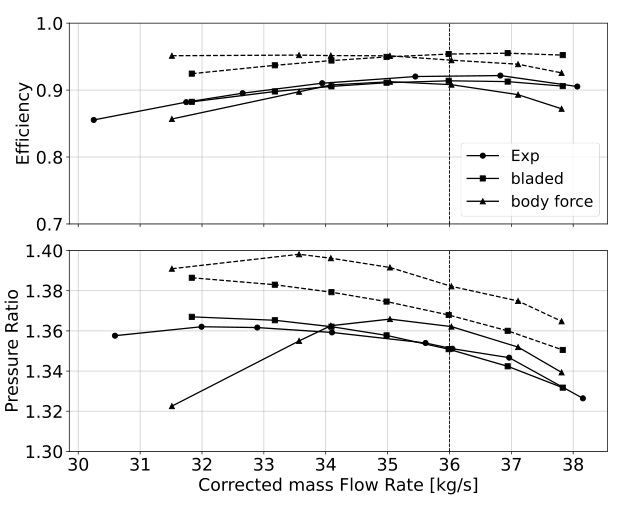
CATANA transonic fan performance curves from body-force study
OpenFOAM · C++ · PythonCFD modeling

Body-force modeling framework

Efficient, geometry-driven models for fans, compressors, and non-axisymmetric blade rows.

↗
Subsea hydraulic
interface engineering
Manufacturing · Mechanical design · FAT
Mechanical designIndustry

Subsea hydraulic systems

Project-specific stab plate drawings, lifting hardware, and hands-on hydraulic testing.

Career

Research and industry experience

A technical background spanning numerical engineering, open-source tooling, and real equipment.

Download CV ↓
  • University of Windsor

    2021–present

    Doctoral researcher in turbomachinery and unsteady flows. OpenFOAM-based modeling, BLI, automated parametric studies, and engineering software.

    CFDPythonHPC
  • MSCM-PPNL Subsea Solutions

    2019–2021

    Subsea engineer. Adapted hydraulic stab plate designs, produced manufacturing drawings, and conducted or supervised hydraulic FAT.

    Mechanical designHydraulicsFAT
  • Shell Nigeria Exploration & Production

    2018

    Engineering internship encompassing metering-system analysis, produced-water data, and structural-analysis exposure.

    Engineering analysisIndustrial systems
Collaboration

Interested in simulation, engineering software, and mechanical R&D.

I welcome conversations about CFD, aerospace and energy applications, scientific computing, and hands-on engineering roles.

Contact me ↗
Portfolio

Selected engineering projects

My work spans computational geometry, physics-based simulation, scientific software, and mechanical hardware. Each project explains the problem, my contributions, methods, and evidence.

Conformal structured mesh around aperiodic guide vanes
Computational geometryOpen source

APT-Grid

Developed most of a Python mesh-generation framework supporting aperiodic turbomachinery.

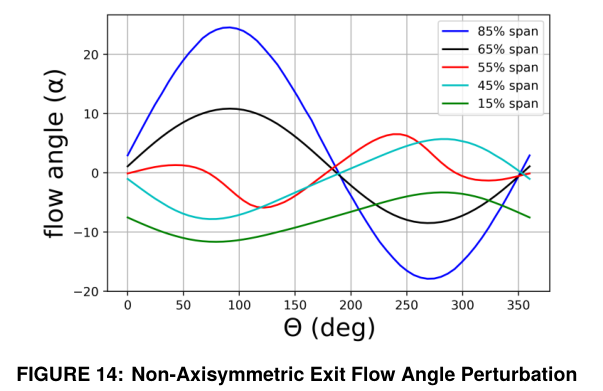
Body-force model flow angle perturbations for a non-axisymmetric guide vane
Numerical modelingOpen source

OpenFOAM body-force framework

Extended established models to support non-axisymmetric blade rows and implemented 3D preprocessing.

⌁
Design to verification
Subsea hydraulic components
Mechanical engineeringIndustry

Subsea hydraulic interfaces

Engineering drawings for project-specific components, plus pressure testing and FAT supervision.

Research publication

OpenFOAM body-force modeling

Research paper presented at ASME Turbo Expo 2026, Milan: An OpenFOAM-Based Implementation of Modern Body Force Models for Fans and Compressors Including Support for Aperiodic Blade Rows (GT2026-179240).

Project source code and sample cases ↗

In development

Additional research and design studies

My aperiodic stator optimization research and historical vehicle fabrication project will be added when the case studies and source materials are ready. No provisional outcomes are presented here.

Experience

Research, software, and engineering practice

My background connects analytical methods with the realities of computational workflows and manufactured systems.

Technical focus

Compressible CFD; turbomachinery; OpenFOAM solver development; numerical interpolation and computational geometry; automated simulation workflows on HPC systems; mechanical interface engineering and hydraulic testing.

I develop reusable tools and assess their predictions against higher-fidelity references, numerical convergence, and the physical behavior the models are intended to capture.

Professional experience

Across research and industry

  • PhD researcher

    University of Windsor · 2021–present

    Turbomachinery, boundary-layer ingestion, body-force models, aperiodic blade rows, mesh generation, and automated design studies. Research presented at ASME Turbo Expo 2026.

  • Subsea engineer

    MSCM-PPNL · 2019–2021

    Mechanical manufacturing drawings for hydraulic stab plates and lifting hardware; hydraulic coupling testing and FAT supervision. Experience reviewing client technical requirements and interface documentation.

  • Engineering intern

    Shell Nigeria · 2018

    Engineering analysis supporting offshore systems, including metering redundancy studies, produced-water operational data, and structural analysis.

More detail

See the engineering behind the claims.

Browse the case studies for implementation details, verification, collaborative roles, and limitations.

View project pages ↗
Contact

Let's talk engineering.

I am interested in engineering and R&D opportunities involving CFD, aerodynamics, numerical simulation, scientific software, and mechanical systems.

info@adekolaadeyemi.com
  • LocationWindsor, Ontario, Canada
  • GitHubTUFRG research group repositories ↗
  • CVDownload current engineering CV ↗
  • AvailabilityPhD completion expected December 2026; contact me to discuss opportunities.
← All projects
Scientific software · Open source

APT-Grid

A Python-based structured mesh-generation framework developed to enable blade-resolved CFD of periodic and aperiodic turbomachinery configurations.
My role
Majority of Python development, geometry processing, implementation and CFD assessment
Technology
Python, NumPy, SciPy, OpenFOAM blockMesh, structured OH meshing
Repository
TUFRG / APT-Grid ↗
Status
Open-source software; research manuscript in preparation
Generated grid around aperiodic guide vanes

The problem I needed to solve

My PhD research investigates whether aperiodic exit guide vanes can mitigate the aerodynamic degradation associated with boundary-layer-ingesting fans. These designs deliberately vary blade geometry around the annulus, but the commercial turbomachinery meshing tools available to the research did not support the required structured, conformal full-annulus grids. I therefore helped develop the missing capability rather than restrict the design study to periodic blades.

What I developed

I wrote most of the Python code for geometry preprocessing, coordinate transformations, passage boundary construction, and surface generation. The passage-centred OH topology enables each blade passage to be constructed individually while adjacent passages share geometric boundaries.

My supervisor developed the OpenFOAM blockMesh dictionary and the grading-related portion of the Python code. We refined the geometric methods through technical discussions and iterative implementation.

Engineering design decisions

Curve robustness. My first cross-passage construction used an ellipse fitted to endpoints and slopes, plus an additional optimized point. The constrained formulation did not reliably yield a unique result. Following my supervisor’s suggestion, I implemented a quadratic Bézier construction that provides direct control of endpoints and tangent directions without that optimization step.

Conformity by construction. Each passage is generated separately, but the topology defines shared geometric boundaries. Corresponding axial cell counts and grading parameters are averaged and applied across passages to obtain compatible node distributions rather than correcting interfaces afterward.
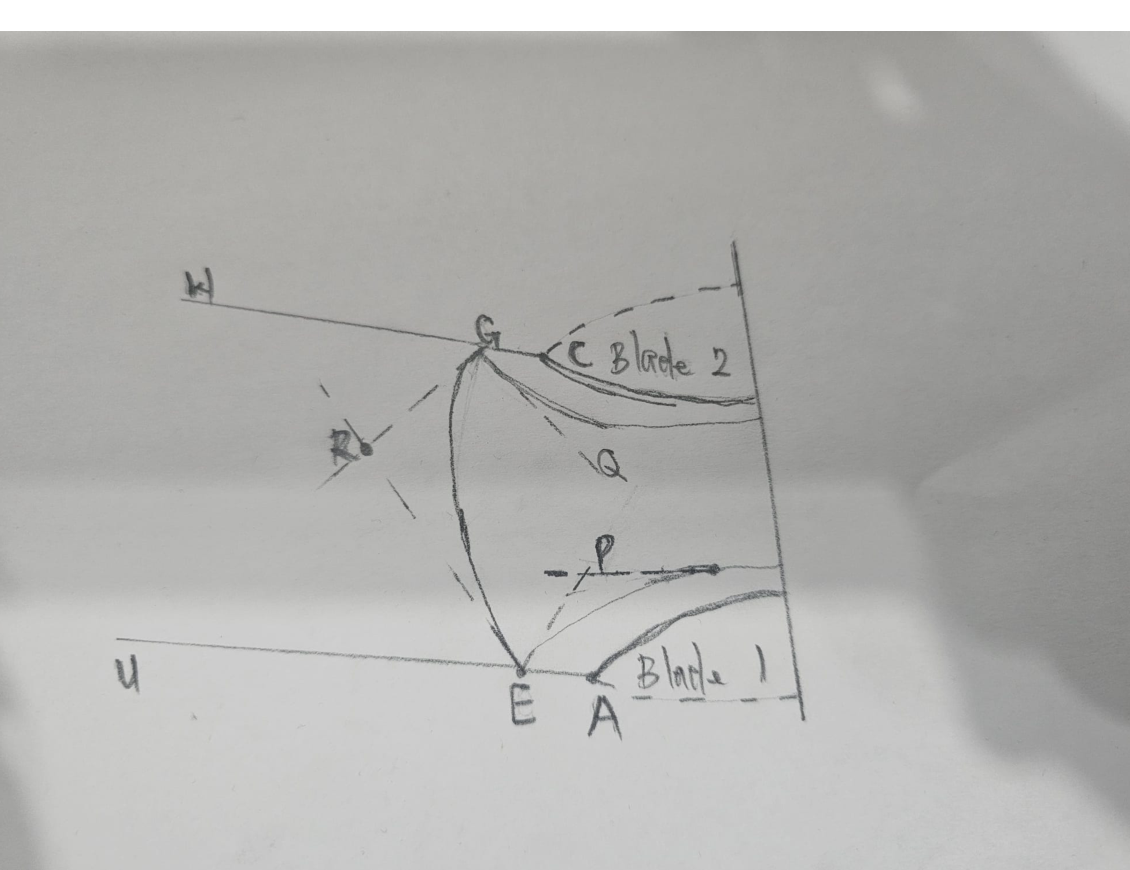
Cross-passage geometric construction from APT-Grid working manuscript
Passage-boundary construction in the working APT-Grid manuscript.

Verification and demonstrated capability

APT-Grid was evaluated using periodic guide vane test cases, with grid-convergence studies and aerodynamic comparisons against Ansys TurboGrid. A full-annulus aperiodic inlet-guide-vane mesh was also generated and used in a blade-resolved CFD calculation.

The manuscript provides detailed convergence and spanwise comparisons. As the manuscript is still being revised, this page does not treat its preliminary numerical differences as final publication figures.
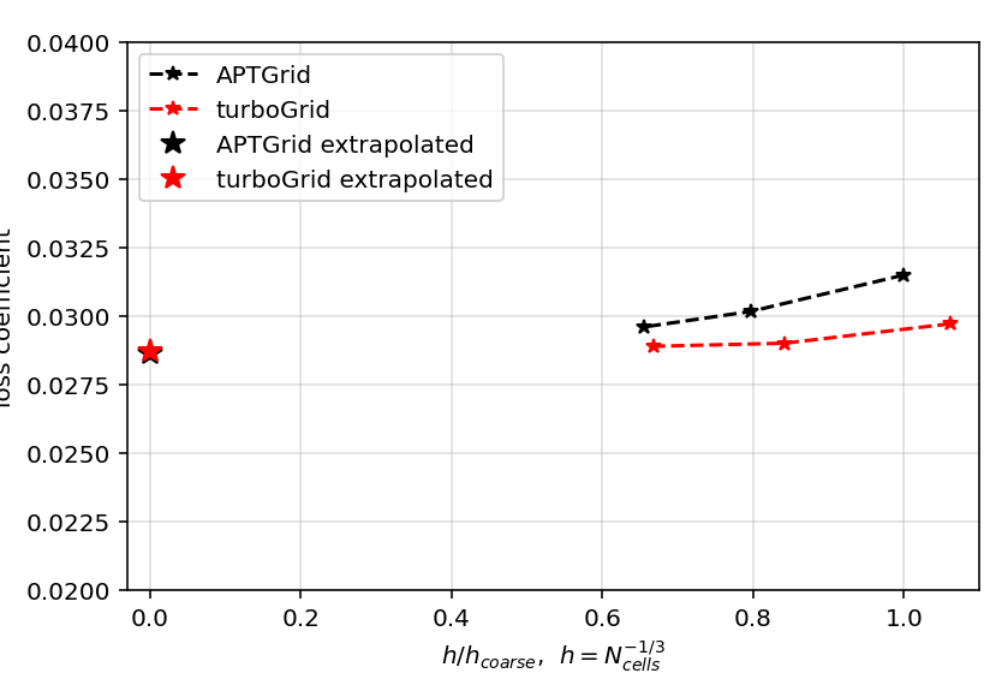
Grid convergence comparison from the APT-Grid manuscript
Example grid-convergence analysis; working manuscript figure, subject to final revisions.

Scope and limitations

The current software assumes compatible meridional blade projections; geometric input requirements and automated curve-processing constraints remain. Its tested capabilities should not be interpreted as universal support for arbitrary blade-row geometries.

Source code: Explore the Python implementation ↗
← ProjectsBody-force framework →
← All projects
CFD modeling · Open source

OpenFOAM body-force modeling framework

Extending physics-based fan and compressor models to handle spatially varying blade rows while avoiding the cost of fully resolving each blade.

My role
Solver refinement and debugging; 3D preprocessing framework; Fourier interpolation; mesh templates; all CFD assessments
Technology
OpenFOAM, C++, Python, least-squares Fourier methods, CFD verification
Paper
ASME Turbo Expo 2026 · GT2026-179240
Repository
Open-source solver and sample cases ↗
Stage efficiency and pressure-ratio trends for CATANA fan

Why build a lower-cost model?

Full-annulus blade-resolved turbomachinery simulations are expensive, especially when the inflow and blades vary circumferentially. Body-force models replace explicit blade geometry with volumetric source terms representing flow turning, blockage, profile losses, and shock losses. The aim is to retain the aerodynamic trends needed for design exploration at lower computational cost.

My engineering contributions

My supervisor developed the first version of the OpenFOAM solver; I subsequently cleaned up the implementation and corrected errors. I developed the Python geometry-preprocessing framework, building on an earlier 2D implementation by Amelia George and extending it to 3D. I also developed the Fourier-based interpolation framework, the parametric blockMesh templates, and performed the numerical assessments.

Turning discrete blade geometry into CFD inputs

The preprocessing system extracts blade camber normals, meridional arclength, tangential thickness, and local angular pitch. For aperiodic blade rows, circumferential variations are represented by truncated Fourier series with coefficients estimated by least squares, accommodating irregular circumferential sampling. Coefficients are interpolated across the meridional plane using Delaunay triangulation and barycentric interpolation before reconstruction at CFD cell centres.

Physics and verification

The framework combines established turning-force, compressibility, blockage, profile-loss, and shock-loss formulations. The equations include a spatially varying local angular pitch, supporting geometric variations beyond traditional uniformly pitched blade rows. Assessments cover an idealized zero-thickness guide vane, the ECL5/CATANA transonic fan, and a periodic/aperiodic NAX guide vane.

The ECL5/CATANA assessment captures broad efficiency trends near the design condition but has documented pressure-ratio discrepancies at off-design operating points; the paper examines stator loss modeling as one contributing mechanism. The NAX guide-vane example demonstrates circumferential flow-turning trends and three-dimensional redistribution of mass flow.

Circumferential flow-angle predictions at multiple span locations
NAX guide-vane flow angle variations from the 2026 manuscript.

Design-study advantage

For the aperiodic NAX IGV, the paper reports a body-force full-annulus grid of approximately 5 million cells versus an estimated 60 million cells for a mesh-independent blade-resolved case. This is a cell-count comparison—not a measured speed-up in runtime.

Mass flux redistribution in non-axisymmetric guide vane
Mass-flux non-uniformity upstream and downstream of the NAX blade row.

Limits and next steps

Body-force models deliberately omit blade-scale flow structures. Their accuracy depends on the validity of the underlying formulations, operating regime, and loss models; they complement rather than replace blade-resolved CFD in a verification strategy.

Research resources: View source code and benchmark cases ↗
← APT-GridSubsea engineering →
← All projects
Industrial experience · Mechanical engineering

Subsea hydraulic interface engineering

Project-specific manufacturing drawings and hands-on factory acceptance testing for hydraulic hardware used in subsea equipment.

Organization
MSCM-PPNL Subsea Solutions Nigeria Ltd.
Period
2019–2021
My role
Drawing modifications and manufacturing documentation; hydraulic FAT execution and supervision
Equipment
Hydraulic stab plates, lifting brackets, hydraulic couplings
MECHANICAL ENGINEERING / INDUSTRY
Illustrative concept only — not an original client drawing or specification

Project context

Hydraulic stab plates house the couplings used to connect flying leads to subsea trees. They require a precise mechanical arrangement for the relevant couplings and mating hardware. Lifting brackets are used to lift and support stab plate assemblies during factory acceptance testing.

My design work

Using established company stab plate templates, I modified designs for individual projects and prepared drawings for manufacture. I also created manufacturing drawings for lifting brackets, documenting geometry, machining features, and assembly requirements. My role involved adapting existing designs to project-specific requirements rather than developing the original stab plate concept.

Testing and equipment verification

I personally performed factory acceptance testing of hydraulic equipment, including operating pressure-testing equipment, pressurizing couplings, monitoring pressure, checking for leakage, and recording results under established company procedures. On other occasions, I supervised the testing activities.

The company's hydraulic coupling FAT procedures cover documentation verification, low-pressure tests, proof-pressure tests, and mated coupling tests, with records of acceptance and test instrumentation. The procedure establishes the testing context; individual acceptance results are not published here.

What this work demonstrates

  • Understanding of mechanical and hydraulic interface hardware.
  • Project-specific engineering drawing modification and manufacturing documentation.
  • Connection between hardware design, fabrication requirements, and equipment verification.
  • Hands-on hydraulic pressure testing and supervision in an industrial environment.
Confidentiality note: Original employer drawings, manufacturing dimensions, and FAT records are intentionally not reproduced on this public portfolio page. The graphic above is illustrative, not a reproduction of the tested equipment.
← Body-force frameworkAll projects →
Say hello
info@adekolaadeyemi.com
AboutWorkExperienceContact
Adekola Adeyemi · Mechanical engineering portfolioGitHub